Home/Facilities/Medical gas installation
Medical infrastructure

Central medical gas installation

A permanent piped installation distributing medical oxygen from a central source to outlets in both operating theatres.

How the device is built

What a medical gas outlet consists of

Click or hover over a part. The descriptions appear one after another.

  1. 2Oxygen quick-release connector

    This is where the anaesthesia machine or an oxygen mask is connected, without carrying cylinders between rooms.

  2. 6Oxygen hose

    A hose with a quick-release connector to the machine or mask; the two theatres have separate circuits, so a fault in one section does not cut off the other.
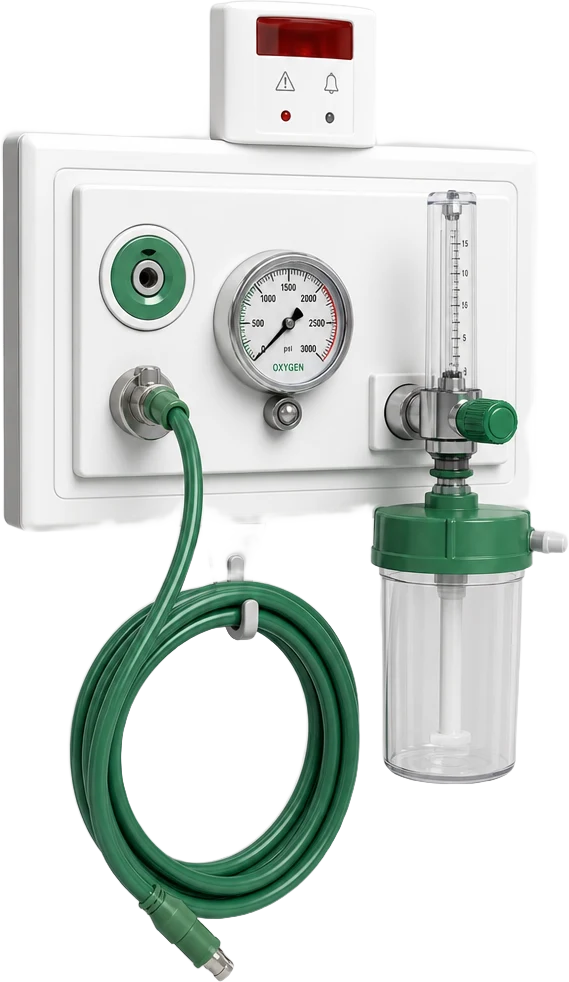
Central medical gas supply: illustrative diagram
  1. 1Alarm indicator

    Warns of a drop in pressure in the pipeline before the oxygen supply is interrupted.

  2. 3Pressure gauge

    The pressure in the system on this section; each outlet has its own gauge.

  3. 4Flowmeter

    Setting of the oxygen flow in litres per minute, matched to the patient.

  4. 5Humidifier

    Humidifies oxygen given over a longer period, protecting the airways from drying out.

Illustrative diagram of an oxygen outlet. The arrangement of parts corresponds to our outlets in both operating theatres, but the appearance may differ.
What it is and how it works

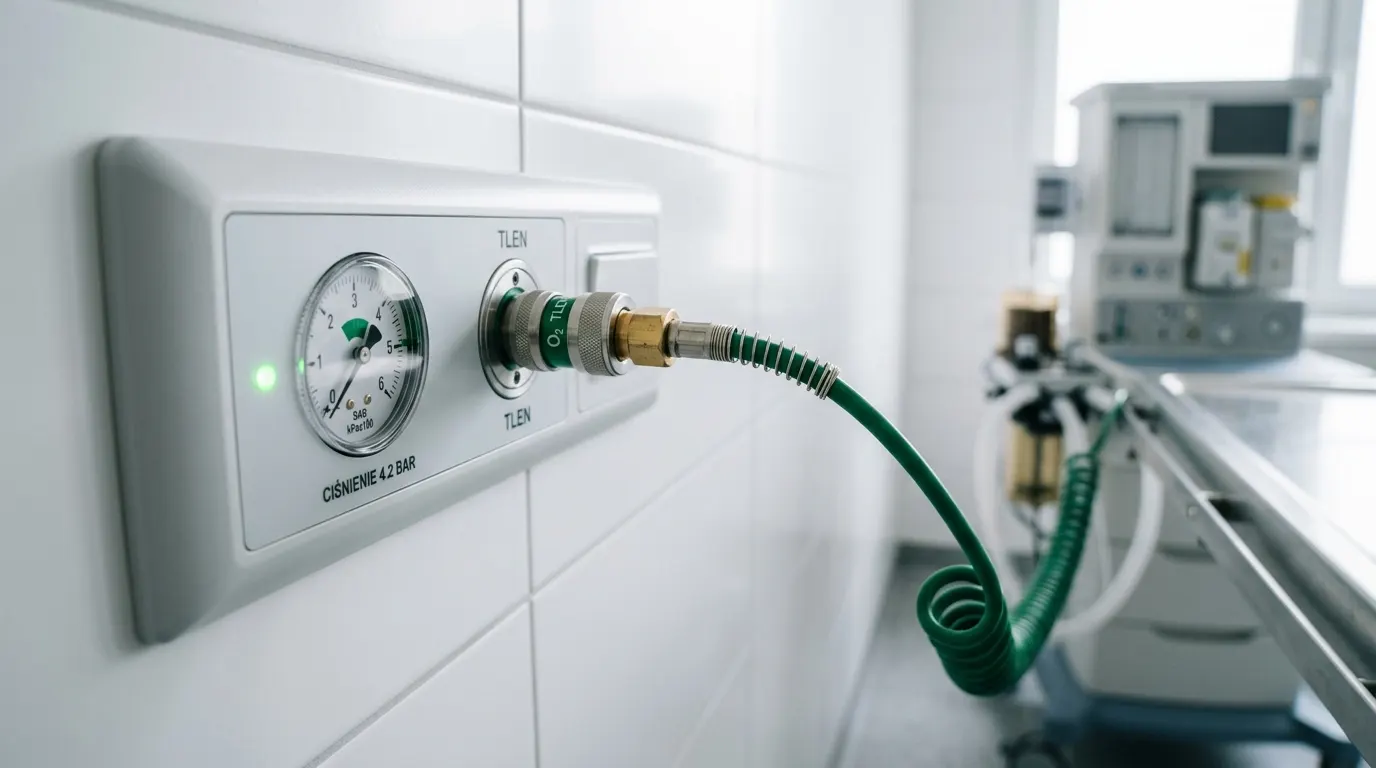
The practice has invested in building a central medical gas supply: a supply source connected by a fixed pipeline to outlets permanently installed in the walls of both operating theatres in the operating suite. Each outlet has its own pressure gauge and a quick-release connector to which the anaesthesia machine or an oxygen mask is connected, without carrying cylinders between rooms. The two theatres have separate circuits, so that a fault in, or maintenance of, one section does not cut off the oxygen supply in the other.

What it offers

For the animal and the owner

An animal under anaesthesia has access to oxygen immediately, without waiting for someone to bring a cylinder from another part of the building. This is a difference measured in seconds, when every one of them counts.

In the diagnostic process

A constant supply of oxygen, independent of portable cylinders, makes it possible to run anaesthesia in both operating theatres in parallel, without competing for the same portable tank.

Examinations and procedures where we use this

Preparing the patient for a procedurePrevention and general medicineDiagnosis and treatment of infectious diseases (parvovirus, FIP, babesiosis, Lyme disease)Internal medicineDog castrationSoft tissue surgeryCat neuteringSoft tissue surgerySpaying a bitch (ovariohysterectomy)Soft tissue surgeryCat spayingSoft tissue surgeryMastectomy — removal of mammary glands affected by a tumourSoft tissue surgeryCaesarean sectionSoft tissue surgeryGastropexy — preventive stomach fixationSoft tissue surgeryGastric dilatation-volvulus (GDV) — life-saving surgerySoft tissue surgerySplenectomy — removal of the spleenSoft tissue surgeryRemoval of a foreign body from the digestive tract (enterotomy)Soft tissue surgeryPyometra — surgerySoft tissue surgeryCorrection of brachycephalic obstructive airway syndrome (BOAS)Soft tissue surgerySurgical treatment of wounds, bites and injuriesSoft tissue surgeryLimb or tail amputationSoft tissue surgeryTPLO — treatment of a ruptured cruciate ligamentOrthopaedics and joint surgeryFracture treatment (osteosynthesis)Orthopaedics and joint surgeryDiagnosis of hip and elbow dysplasiaOrthopaedics and joint surgeryECGCardiologyDental treatment — scaling and polishing under anaesthesiaDentistryTooth extractions (including surgical)DentistryTreatment of periodontal diseaseDentistryTooth resorption in cats (FORL) and feline gingivitisDentistryX-ray for joint dysplasiaDiagnostic imagingGastroscopy and endoscopy of the digestive tractEndoscopyPre-anaesthetic assessment for general anaesthesiaAnaesthesiology and pain managementGeneral anaesthesia with monitoringAnaesthesiology and pain managementSedation for diagnostic examinationsAnaesthesiology and pain managementHospitalisation with an observation chartIn-patient hospital and emergenciesIntensive fluid therapy and oxygen therapyIn-patient hospital and emergenciesPost-operative care and recoveryIn-patient hospital and emergenciesEmergencies during opening hours: triageIn-patient hospital and emergencies
This page is a translation of the Polish original. In case of doubt, the Polish version prevails. Polski