Anaesthesia station and monitoring
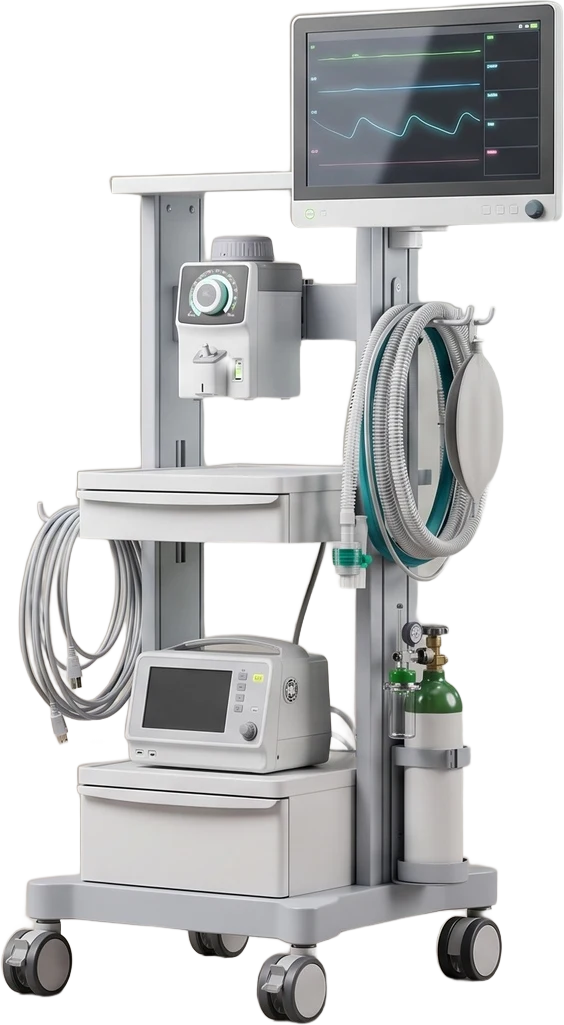
An inhalation anaesthesia machine with a ventilator and a vital signs monitor: ECG, saturation, capnography, blood pressure, temperature.
What an anaesthesia station consists of
Click or hover over a part. The descriptions appear one after another.
- 2Anaesthetic vaporiser
Delivers isoflurane or sevoflurane into the breathing mixture. The dial sets the concentration, which we choose to suit the patient, not the species.
- 5Monitoring leads
ECG electrodes, a saturation sensor, a blood pressure cuff and a temperature probe: these supply the data to the monitor.
- 6Ventilator
Takes over breathing for the patient when mechanical ventilation is needed under anaesthesia. We set the breathing parameters individually.
- 1Patient monitor
A continuous record of ECG, saturation, capnography, blood pressure and temperature. A dedicated person, not the surgeon, watches the record throughout the procedure.
- 3Breathing circuit
The tubes carry the gas mixture to the patient. The breathing bag makes it possible to take over ventilation by hand at any moment.
- 4CO₂ absorber
Removes carbon dioxide from the exhaled air, so the circuit works as a closed loop and conserves the anaesthetic.
- 7Oxygen cylinder
A reserve source of oxygen in case the central medical gas supply fails.
Illustrative diagram of a typical anaesthesia station. The arrangement of parts corresponds to our set-up, but the appearance of the devices may differ.
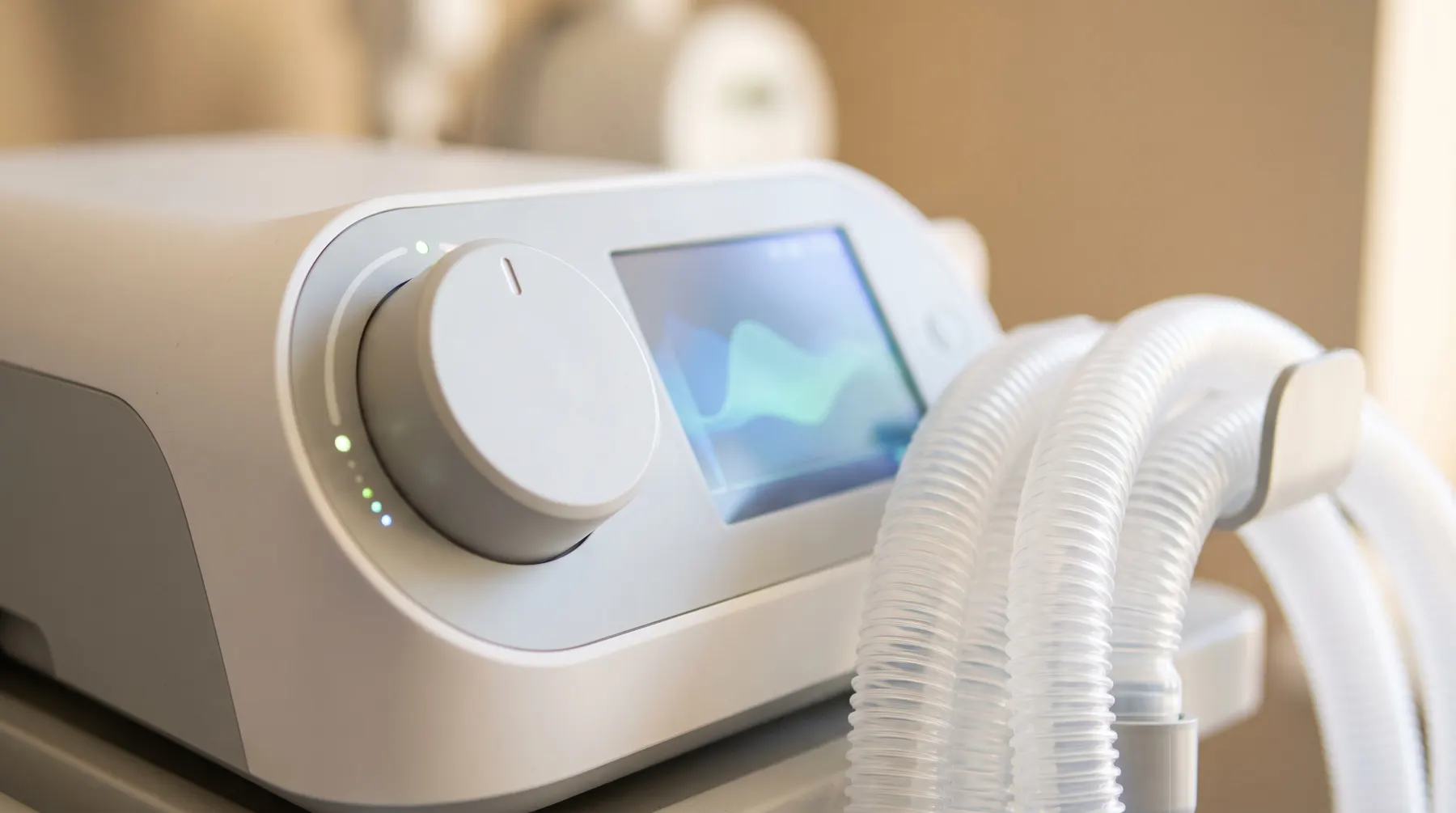 Intra-operative monitoring
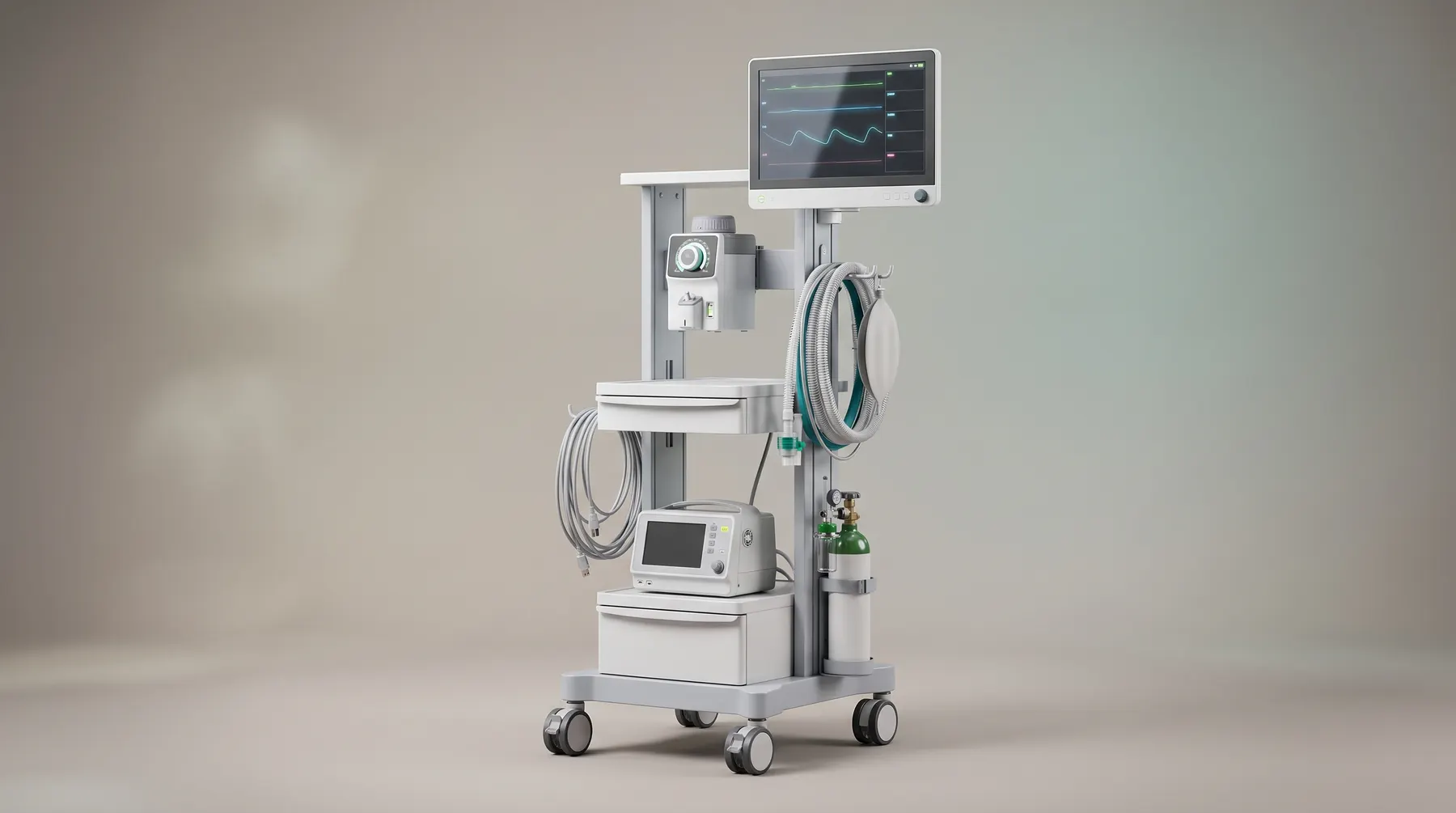 Inhalation anaesthesia machine: complete tower
What it is and how it works
The anaesthesia station consists of an inhalation anaesthesia machine (isoflurane/sevoflurane) with the option of mechanical ventilation, and a multi-parameter patient monitor. The monitor continuously records the ECG, blood oxygen saturation (pulse oximetry), the concentration of carbon dioxide in exhaled air (capnography), arterial blood pressure and body temperature. A dedicated person, not the surgeon, watches the record at all times.
What it offers
General anaesthesia is safe when changes in the parameters are detected within seconds, not after the fact. Continuous monitoring is the difference between reacting to a fall in blood pressure as it begins and reacting to its consequences.
The record of the parameters goes into the patient's medical records. At later anaesthetics we know how the body responded previously and can tailor the anaesthetic plan individually.