Incubator for patients
A chamber with controlled temperature, humidity and oxygen supply for newborns, patients with hypothermia and patients in a serious condition.
What an incubator consists of
Click or hover over a part. The descriptions appear one after another.
- 4Ventilation and filter
Filtered air circulation; keeps the temperature even throughout the chamber.
- 5Transparent door
Constant observation of the patient: puppies and kittens after a caesarean section, animals chilled after a procedure, senior pets.
- 6Bedding
A soft, washable surface; for a longer stay it is changed between patients.
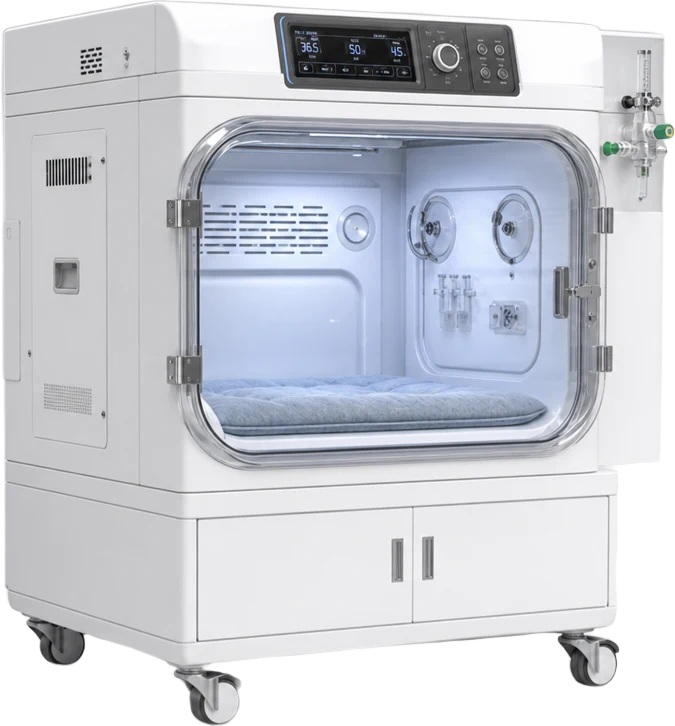
- 1Control panel
Set temperature, humidity and oxygen concentration; the device maintains them automatically and sounds an alarm if they deviate.
- 2Oxygen flowmeter
Delivery of oxygen into the chamber for patients in respiratory failure.
- 3Access ports
They make it possible to examine the patient or give a medicine without opening the door and losing heat.
- 7Cabinet and wheeled base
Space for accessories; the whole unit can be moved to the hospital ward or the treatment room.
Illustrative diagram of an incubator. The appearance of the device may differ from ours.
 Incubator
What it is and how it works
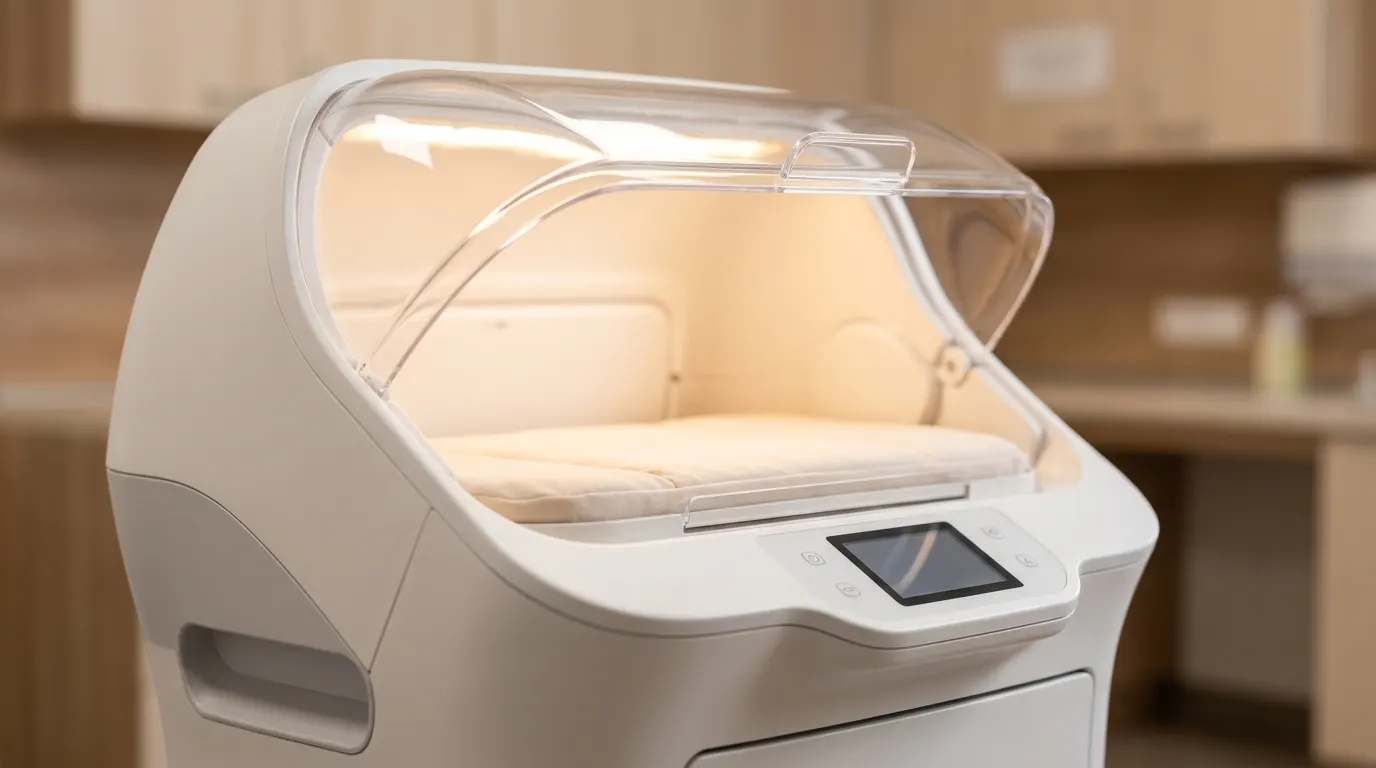
The incubator maintains constant, set environmental conditions: temperature, humidity and oxygen concentration. We use it for puppies and kittens after a caesarean section, for patients chilled after long procedures, for small animals in respiratory failure, and for geriatric patients with impaired thermoregulation.
What it offers
Newborns and very small animals lose heat extremely quickly; the incubator gives them a chance to get through the first, most difficult hours.
Controlled oxygen therapy without the stress of a mask or oxygen collar: the patient stays calm and the staff can see it at all times.