
Patient warming system
Active warming of the patient during the procedure and recovery — preventing hypothermia, the most common complication of anaesthesia.
What a patient warming system consists of
Click or hover over a part. The descriptions appear one after another.
- 4Hose connector
A quick-release connector for the warm-air blanket; the blankets are single-use or disinfected between patients.
- 3Air hose
A flexible hose that carries warm air to the blanket covering the patient during the procedure and recovery.
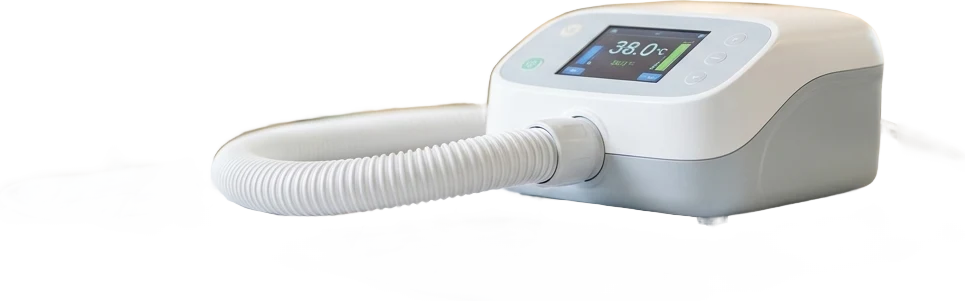
- 2Temperature display
Setting of the air temperature, usually in several steps; the team chooses it to suit the patient and the stage of the procedure.
- 1Warm-air unit
Heats the air and blows it into the warm-air blanket. No heating mats or mattresses, which risk burns.
Illustrative diagram of a warm-air unit. The appearance of the device may differ from ours.
 Patient warming
What it is and how it works
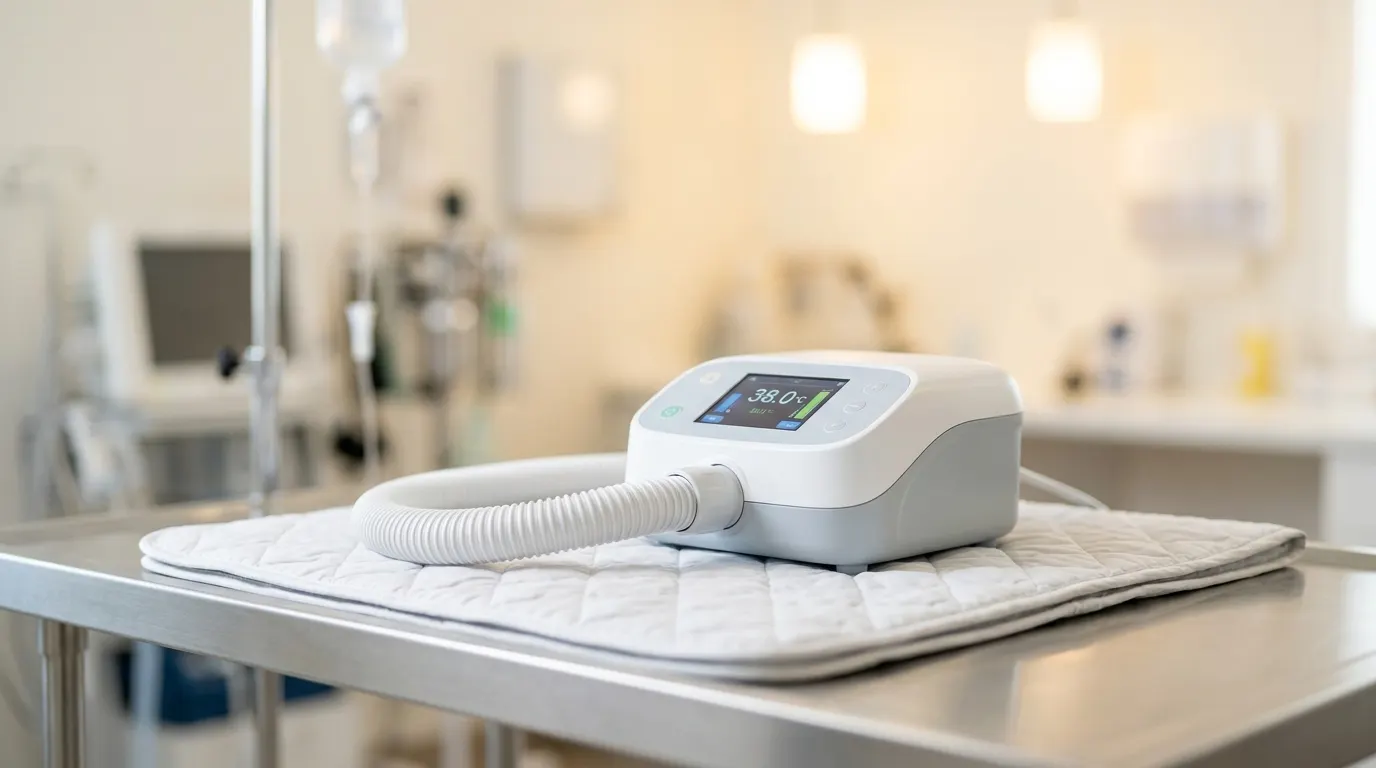
Under general anaesthesia the body loses the ability to maintain its temperature. Warming with a flow of warm air, without heating mats or mattresses, which risk burns, maintains body temperature during the procedure and during recovery, when the risk of chilling is greatest.
What it offers
A patient that has not become chilled in the theatre wakes up faster, shivers less, has less pain from the wound and returns to eating sooner.
A stable temperature means stable circulation and predictable metabolism of anaesthetic drugs, so fewer adjustments during the anaesthetic.